
Porcelain vs Quartz vs Ultracera:
Which Benchtop Material Is Best for Your Home?
Choosing the right kitchen benchtop is one of the most important design decisions in any renovation or new build. In Australia—especially after the 2024 Engineered Stone Ban—homeowners and designers are actively searching for safer, more durable, and low-maintenance alternatives.
In this guide, we compare three of the most talked-about materials today: Porcelain, Quartz, and Ultracera Bio-Terra Claystone.
Each has its strengths, but their differences matter depending on how you cook, clean, and live.
1. Porcelain Benchtops
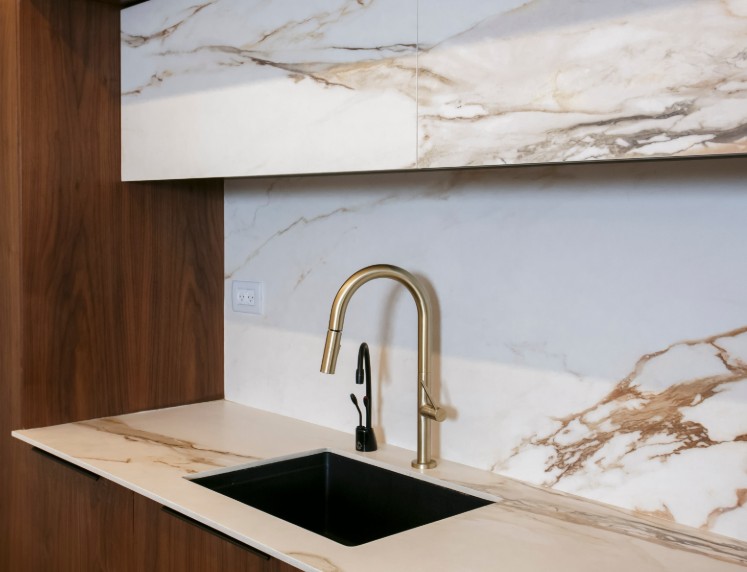
Porcelain (also known as sintered stone) has surged in popularity as a high-performance material for modern Australian kitchens.
How it’s made
Pressed mineral powders fired at over 1200°C—similar to ceramic, but in large formats.
Pros
✔ Extremely scratch-resistant
✔ Highly heat-resistant—pots and pans can go directly on the surface
✔ <0.5% absorption rate (very stain resistant)
✔ UV-stable and suitable for outdoors
Cons
✘ Brittle edges; can chip if heavy objects fall
✘ Patterns are often surface-printed, not through-body
✘ Difficult and expensive fabrication
Best for: Homeowners who want ultra-low maintenance performance and a contemporary look.
2. Quartz Benchtops (Engineered Stone)
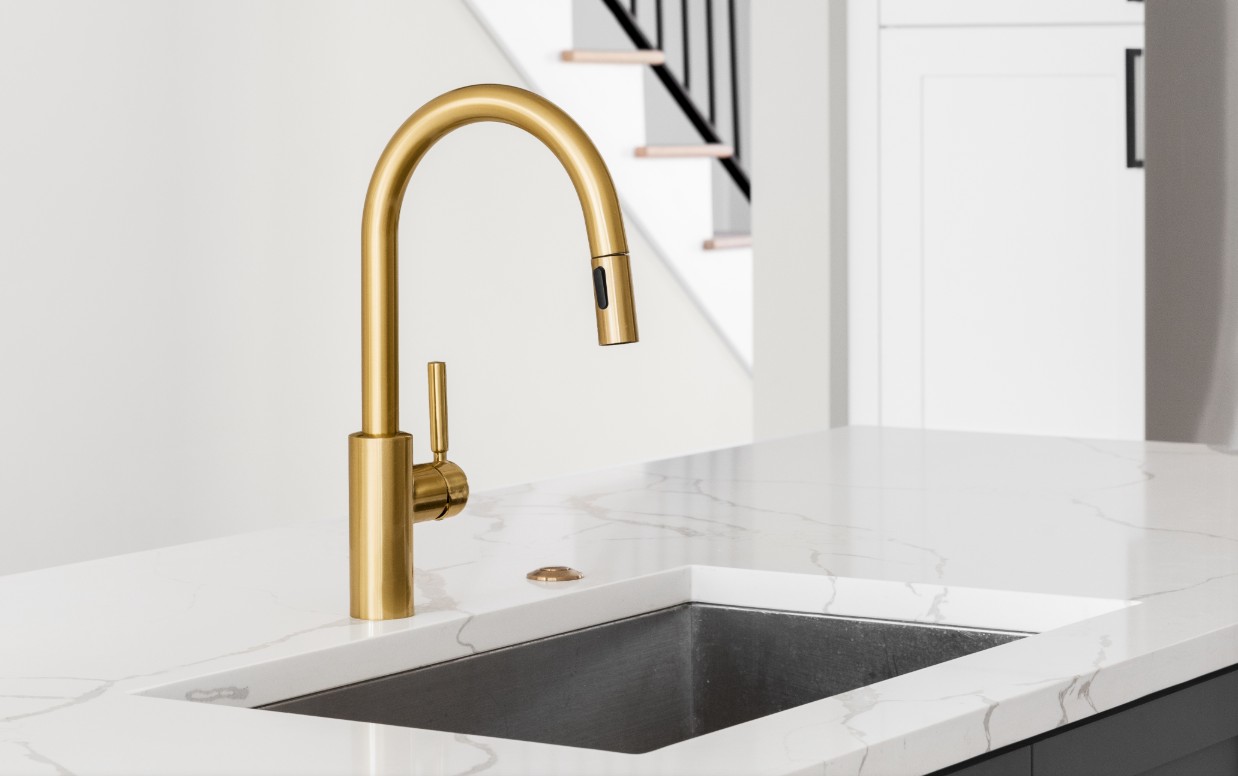
Quartz was once the most common benchtop in Australia, but due to high crystalline silica content, it has been banned nationwide from July 2024 onward.
How it’s made
~90% quartz sand mixed with resin, compressed under vacuum.
Pros
✔ Non-porous and stain-resistant
✔ Consistent colours
✔ Durable in regular kitchen use
Cons
❌ BANNED in Australia (silica dust health risk)
✘ Not heat-proof
✘ Outdoor UV exposure may cause fading
✘ Difficult to repair
Best for: Markets outside Australia. Not available or recommended for Australian homeowners.
3. Ultracera Bio-Terra Claystone (New-Generation Surface)
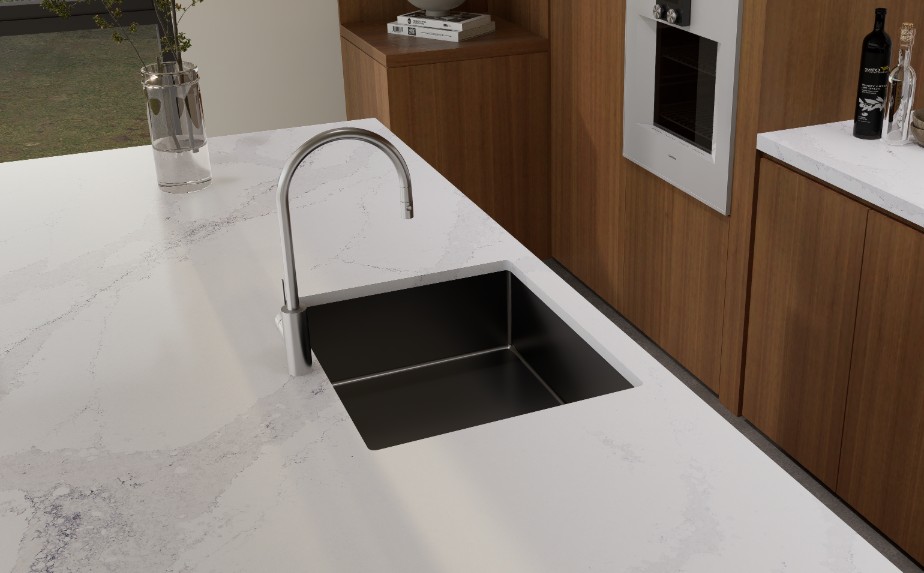
Ultracera is a breakthrough category designed for the post-quartz-ban Australian market.
It bridges the gap between porcelain and traditional engineered surfaces with a safer, more stable formulation.
How it’s made
Refined Bio-Terra synthetic clay minerals combined with a matured resin system, then pressed into dense stone-like slabs.
Key Benefits
✔ <1% crystalline silica — safe for fabrication under the new regulations
✔ Non-porous and highly stain resistant
✔ Warm, stone-like touch (not icy cold like porcelain)
✔ Through-body veining for better repairability
✔ Strong impact resistance (less brittle than porcelain)
✔ Suitable for kitchens, bathrooms, commercial spaces
Considerations
– Premium material, priced above entry-level options
– Some patterns may appear more uniform depending on the design style
Best for: Homeowners who want a safe, durable, and beautiful benchtop that meets Australia’s new safety standards.
Which Material Should You Choose?
✔ If you want the lowest maintenance
Choose Porcelain or Ultracera.
✔ If you care about safety after the quartz ban
Choose Ultracera (<1% silica).
✔ If you want a warm, natural feel
Choose Ultracera.
✔ If you want high heat resistance
Choose Porcelain or Ultracera.
✔ If you’re replacing quartz
Ultracera is the closest modern alternative.